Market Study, Market report, Market Research, Market forecast - New June 2026 update
Fire Protection Industry Worldwide
Innovation and Emerging Markets 2024, 2025, 2026, 2027, 2030, 2035
For passive and active fire protection, technologies, applications, competition, markets and development to 2035 165 billlion $
-With Markets for Fire Sprinkler worldwide, Water Mist Technologies, Gaseous Suppression.
120 pages extra
We can develop any type of customized study for you also your marketing and strategies in english, german, chinese
1) Initial Position
Until 2025 for the best companies 12 to 18 % increase in turnover and 12 to 17 % EBIT. There are big differneces in regions. Ask what we expect until 2035 We have more than 20 new Fire Protection Studies please ask for the list or send your inquiry
Climate change and environmental influence lead for some years to a higher increase of the growth in fire protection markets. The markets for fire protection have gained importance in the last years. The death toll of fire accidents is approx. 12 000 in the USA, 7000 in Europe and more than 50 000 in Asia per year. The loss of assets is about 70 billion Euro per year with an increasing tendency. The total worldmarkets show growth, but very different developments in different segments and countries.
The market worldwide shows growth rate of over 10% since 2023 and reached over 165 billion Euro in 2035. There are 6000 companies.
We finished our new study September 2023 worldwide with over 550 pages.
http://www.hkc22.com/fireprotection.html
Passiv and active FP the Markets expected 145 to 165 billion by 2035.
The new forecasts up to 2035 is made with a delphi Study. More than 480 interviews with companies and institutes lead to completely new technologies and markets. Like convergence with security markets and in parts medical instruments. We also made a study for the European Cartel Office. Some markets are in the red during the pandemic. Developments will be difficult for many medium-sized and small companies. The M&A market is growing strongly. You can find these and many other results in the new study. The study helps to adapt to new developments and to develop new strategies.
FIRE PROTECTION INDUSTRY Growth, Innovation and New Standards.
Innovation in FP is the result of external factors, including regulations, changing infrastructure and growing pressures for more sustainable measures. Increasing population, the trend for high rise buildings are a challenge for active and passive FP today and the next decades. We expect the next few years 6 times more high-rise buildings than today worldwide. Improve performance is the Key for the companies to remain profitable and generate growth. Growing in the value chain is better for many companies than in their own segment globally, as well as locally. Global warming increase in the overall temperature lead to catastrophic events and demonstrate the importance of new standards to ensure life safety and property protection. Sustainable technologies is a requirement for manufacturers for example moving away from agents that environmentally damaging. Infrastructure and buildings getting more complex FP has to suit these requirements. Future product development, combining existing technologies and allow manufacturers to drive innovation in the market environmentally friendly and safe for people and valuables. Last but not the least, disruptive technologies and innovations such as nanotechnology and information technology create new methods and new applications for more efficient fire protection and save the loss of life and property.
We also made a study for the European Cartel Office. Passive fire protection is basically a fire and smoke resistant construction and is defined in various building codes. However, many countries developed their own standards and regulations and best practice guides. An overview of these regulations, standards and accreditation is necessary for any international competitors.
2) Goals of the Technology / Market Study
Goal and task of the study is the definition, evaluation and prognosis of the products and services. Further, the competitive situation will be analyzed and market developments up to 2035 will be examined.
3) Table of Contents
I. Management Summary
 1.Overview markets, market developments 2025 and 2035, market
segments, technologies
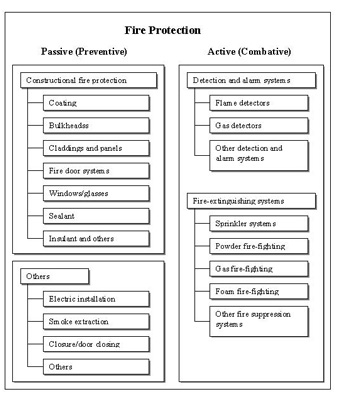
1.2.Overview of passive and active fire protection
1.2.1.Summary of passive fire protection market
1.2.2.Summary of active fire protection market
1.3.Market attractiveness and market growth
1.3.2.Portfolio-Countries in West Europe
2.Definition
2.1.Market segmentation according to the fields of
application
2.2.Market segmentation according to technologies
2.2.1.Passive fire protection – market segmentation
2.2.2.Active fire protection – market segmentation
3.Key factors
3.1.1.Construction Provision
3.1.3.Classification of fire resistance of constructions
units and special construction units according to DIN 4102
3.2.Constructive activities
3.2.1.Permits for building construction in Germany
3.2.2.Construction activities in China
4.Compliance
II. Technologies and Systems of Passive and Active Fire Protection
A. Passive fire protection (constructional)
1. Coatings
1.1 Intumescent coatings for steel, wood, cables etc.
1.2 Ablation coatings
2. Bulkheads
2.1 Hard bulkheads
2.2 Soft bulkheads
2.3 Building-frame bulkheads
2.4 Fire stop pillows
2.5 Pipe seals (for incombustible pipes)
2.6 Pipe wraps/collars
3. Fire protection cladding and panels
3.1 Fire protection panels
3.2 Fire protection cladding for installation channels
3.3 Spray plaster
4. Fire protection doors
5. Fire protection glazings
6. Sealant
6.1 Joint-sealant
6.2 Flame resistant adhesives and connection material
7. Insulant and others
B. Active fire protection
1. Detection and alarm systems
1.1 Flame detectors/systems
1.2 Gas detectors/systems
2. Fire suppression systems
2.1 Sprinkler systems
2.2 Powder fire-fighting systems
2.3 Gas fire-fighting systems
2.4 Foam fire-fighting systems
C. Overview installation and smoke extraction
1. Electric Installation
2. Smoke extraction
D. The market for Smoke and Heat Exhaust Systems
1.Summary
2.Market structure overview
3.Technologies and Products of smoke and heat exhaust market worldwide
4.Smoke and heat system worldwide 2025-2035 by regions in Euro
5.Smoke and heat system worldwide in seleceted countries 2025-2035 in Euro
6.Value chain for smoke and heat exhaust systems
7.Value chain of smoke and heat exhaust market worldwide 2025-2035 in Euro
8.Total market for smoke and heat ventilation and control system worldwide 2025-2035 in Euro
9.Markets for smoke and heat exhaust systems worldwide 2025-2035 by target groups in Euro
E. The Market for Flame Retardants
1.Summary
2.Markets worldwide 2015-2025, 2035 by regions in Euro
3.Markets worldwide 2015-2025,2035, by technologies in Euro
4.Markets worldwide 2015-2025,2035, by applications in Euro
5.Flame retardant markets in Western Europe 2015-2025,2035, by countries inEuro
6.Flame retardant markets in Eastern Europe 2015-2025,2035, by countries in Euro
7.Flame retardant markets in Nafta 2015-2025,2035, by countries in Euro
8.Flame retardant markets in Asia 2015-2025,,2035 by countries in Euro
III. Market segmentation by applications
A. Passive Fire Protection
1. Building structure
1.1 Structural frame fire protection systems
1.2 The building externals
2. Fire doors/shutters
2.1 Fire protection doors
2.2 Fire shutters
3. Fire walls/separating barriers
3.1 Compartment walls and floors
3.2 Fire walls or fire separating elements
3.3 Floors
3.4 Cavity barriers
3.5 Fire curtains
4. Pipes/cables
4.1 Fire stopping materials
4.2 Pipe cable and service penetrations (including linear gap seals)
5. Ductworks
5.1 Air distribution systems
5.2 Fire-resisting ductwork
5.3 Service ducts and shafts
6. Fire-resisting glazing systems
7. Consulting and examing
B. Active Fire Protection
1. Flame detection
2. Smoke control
3. Sprinkler
4. Powder fire suppression
5. Gas fire suppression
IV. Market segmentation by target groups
This section can be purchased separately, with details in the single sectors, please contact us for inquiries.
1.Private buildings
2.Public buildings
3.Industial buildings
4.Power stations
5.Mining fields (oil)
6.Airports
7.Waste Treatment facilities
- Biomass plants
- Biofuel plants
- Biogas plants
8. Oil and Gas
9. Solar Station and -Building, Energy Storage Plants
These target groups will be decipted by countries, by years. The division is based on the classification of countries´ regulations, which differentiate the buildings of special sort and use from other buildings. This division is used in the study of the application fields such as:
-School
-Church
-Museum
-Cultural monument
-Theater
-Hotels
-Hospitals
-Office buildings
-Large-scale garage
-All kinds of ships
-Drilling platform
-Power plants
-Sewage plants
-Warehouses
-Treatment facilities of chemical solvents
-Waste treatment facilities
-Heat treatment
-Packaging facilities
-Laboratories
-Chemical factories
-Filling station of inflammable fluids and gases
-Pumping stations
-Others
V. Technology development
1. Nanotechnology
1.1 Introduction of nanotechnology
1.2 Benefits of fire protection industy from nanotechnology
Enhancing fire resistance and thermal insulation
Tailored materials
Smart materials
Lightweight materials
Strength and hardness enhancement
Enhancing coating performance
Ultrafine detecting and monitoring
Physical infrastructure monitoring
Raising fire extinguishing efficiency
2. Environment technology
a, Reduction of raw material consumption
b, Recycling
c, Zero emission
d. Renewable Energy and Energy storage
VI. Overview of Regulations, Standards, Accreditation and Codes
1. International Standards
a.ISO Standards
b.Building Codes
2. Country related
a.Germany
ii.Overview of regulations and specifications
b.United Kingdom
i.Construction specification
ii.Overview of statutory requirements
iii.Manufactures and product test standards
c.European Union
d.USA
e.China
VII. Markets
1. Market definition
2. Overview of market – world
2.1 State and development
Value Chain for Sprinkler Systems in Average
2.1.1 The total market for passive and active fire protection – worldwide 2015-2025 in Mio. €
2.1.2 The total market for active and passive fire protection worldwide by regions ,2015-2025 in Mio. € (including services/installation)
2.1.3 The total market for active and passive fire protection worldwide by regions ,2015-2025 in Mio. € (without services/installation)
2.2 Markets for passive fire protection worldewide 2015-2025 in Mio. Euro
2.2.1 The total market for passive (constructional) fire protection worldwide by regions 2015-2025 in Mio. € (including services/installation)
2.2.2 The total market for passive (constructional) fire protection worldwide by regions ,2015-2025 in Mio. € (without services/installation)
2.2.3 The market for passive fire protection worldwide by technologies/products 2015-2025 in mio. €
2.2.4 The market for passive fire protection worldwide by technologies ,2015-2025 in mio. €
2.2.5 The market for coatings worldwide by products 2015-2025 in Mio. €
2.2.6 The market for intumescent coatings worldwide by products 2015-2025 in Mio. €
2.2.7 The market for claddings worldwide by products 2015-2025 in Mio. €
2.2.8 The market for bulkheads worldwide by products 2015-2025 in Mio. €
2.2.9 The market for fire protection doors worldwide by products ,2015-2025 in Mio. €
2.2.10 The market for fire protection glazings in worldwide by products ,2015-2025 in Mio. €
2.2.11 The market for other passive fire protection worldwide by products ,2015-2025 in Mio. €
2.2.12 The market for passive fire protection worldwide by applications ,2015-2025 in mio. €
2.2.13 The market for passive fire protection worldwide by target groups ,2015-2025 in Mio. €
2.3 Markets for active fire protection worldewide 2015-2025 in Mio. Euro
2.3.1 The total market for active fire protection worldwide by technologies 2015-2025 in Mio. €
2.3.2 The total market for active fire protection worldwide by regions 2015-2025 in Mio. € (including services/installation)
2.3.3 The total market for active fire protection worldwide by regions ,2015-2025 in Mio. € (without services/installation)
2.3.4 The total market for active fire protection worldwide by applications 2015-2025 in Mio. €
2.3.5 The total market for detection and alarm systems worldwide by products
i). The market for detection and alarm systems worldwide by products 2015-2025 in mio. €
ii). The market for fire detection systems worldwide by products ,2015-2025 in mio. €
2.3.6 The market for fire-extinguishing systems worldwide by products 2015-2025 in mio. €
2.3.7 The market for active fire protection worldwide by target groups ,2015-2025 in mio. €
3. Overview of market – West Europe
3.1 State and development
3.2 Markets for passive fire protection in West Europe 2015-2025 in Mio. Euro
3.2.1 The total market for passive fire protection in West Europe ,2015-2025 in Mio. €
3.2.2 The total market for passive fire protection in West Europe by reigions 2015-2025 in Mio. € (including services/installation)
3.2.3 The total market for passive fire protection in West Europe by regions ,2015-2025 in Mio. € (without services/installation)
3.2.4 The market for passive fire protection in West Europe by technologies/products ,2015-2025 in mio. €
3.2.5 The market for coatings in West Europe by products 2015-2025 in Mio. €
3.2.6 The market for intumescent coatings in West Europe by products 2015-2025 in Mio. €
3.2.7 The market for claddings in West Europe by products 2015-2025 in Mio. €
3.2.8 The market for bulkheads in West Europe by products 2015-2025 in Mio. €
3.2.9 The market for fire protection doors in West Europe by products 2015-2025 in Mio. €
3.2.10 The market for fire protection glazings in West Europe by products 2015-2025 in Mio. €
3.2.11 The market for other passive fire protection in West Europe by products 2015-2025 in Mio. €
3.2.12 The market for passive fire protection in West Europe by applications ,2015-2025 in mio. €
3.2.13 The market for passive fire protection in West Europe by target groups ,2015-2025 in Mio. €
3.3 Markets for active fire protection in West Europe ,2015-2025 in Mio. Euro
3.3.1 The total market for active fire protection in West Europe 2015-2025 in Mio. €
3.3.2 The total market for active fire protection in West Europe by regions 2015-2025 in Mio. € (including services/installation)
3.3.3 The total market for active fire protection in West Europe by regions 2015-2025 in Mio. € (without services/installation)
3.3.4 The market for active fire protection in West Europe by technologies ,2015-2025 in Mio. €
3.3.5 The total market for detection and alarm systems in West Europe by products
i).The market for detection and alarm systems in West Europe by products 2015-2025 in mio. €
ii). The market for fire detection systems in West Europe by products 2015-2025 in mio. €
iii). The market for fire detectors in West Europe by products 2015-2025 in mio. €
3.3.6 The market for fire-extinguishing systems in West Europe by products 2015-2025 in mio. €
i) The market for fire-extinguishing systems in West Europe by products ,2015-2025 in mio. €
ii) The market for sprinkler systems in West Europe by products 2015-2025 in mio. €
iii) The market for powder systems in West Europe by products 2015-2025 in mio. €
iv) The market for foam systems in West Europe by products 2015-2025 in mio. €
v) The market for gas fire-extinguishing systems in West Europe by products 2015-2025 in mio. €
3.3.7 The market for other fire protection systems in West Europe by products 2015-2025 in mio. €
3.3.8 The market for active fire protection in West Europe by target groups ,2015-2025 in mio. €
4. Overview of market – Germany
4.1. State and development –total market for passive (constructional) and active (combative) fire protection – Germany
4.2 Markets for passive fire protection in Germany 2010,2011-2025 in Mio. Euro
4.2.1 The total market for passive fire protection in Germany 2010,2011-2025 in Mio. €
4.2.2 The market for passive fire protection in Germany by technologies/products 2010,2011-2025 in mio. €
4.2.3 The market for coatings in Germany by products 2010,2011-2025 in Mio. €
4.2.4 The market for intumescent coatings in Germany by products 2010,2011-2025 in Mio. €
4.2.5 The market for claddings in Germany by products 2010,2011-2025 in Mio. €
4.2.6 The market for bulkheads in Germany by products 2010,2011-2025 in Mio. €
4.2.7 The market for fire protection doors in Germany by products 2010,2011-2025 in Mio. €
4.2.8 The market for fire protection glazings in Germany by products 2010,2011-2025 in Mio. €
4.2.9 The market for other passive fire protection in Germany by products 2010,2011-2025 in Mio. €
4.2.10 The market for passive fire protection in Germany by applications 2010,2011-2025 in mio. €
4.2.11 The market for passive fire protection in Germany by target groups 2010,2011-2025 in Mio. €
4.3 Markets for active fire protection in Germany 2010,2011-2025 in Mio. Euro
4.3.1 The total market for active fire protection in Germany 2010,2011-2025 in Mio. €
4.3.2 The market for active fire protection in Germany by technologies 2010,2011-2025 in Mio. €
4.3.3 The total market for detection and alarm systems in Germany by products
i). The market for detection and alarm systems in Germany by products 2010,2011-2025 in mio. €
ii). The market for fire detection systems in Germany by products 2010,2011-2025 in mio. €
iii). The market for fire detectors in Germany by products 2010,2011-2025 in mio. €
4.3.4 The market for fire-extinguishing systems in Germany by products 2010,2011-2025 in mio. €
i) The market for fire-extinguishing systems in Germany by products 2010,2011-2025 in mio. €
ii) The market for sprinkler systems in Germany by products 2010,2011-2025 in mio. €
iii) The market for powder systems in Germany by products 2010,2011-2025 in mio. €
iv) The market for foam systems in Germany by products 2010,2011-2025 in mio. €
v) The market for gas fire-extinguishing systems in Germany by products 2010,2011-2025 in mio. €
4.3.5 The market for other fire protection systems in Germany by products 2010,2011-2025 in mio. €
4.3.6 The market for active fire protection in Germany by target groups 2010,2011-2025 in mio. €
5. Overview of market – Great Britain
5.1. State and development –total market for passive (constructional) and active (combative) fire protection – United Kingdom
5.2 The market for passive fire protection – Great Britain
5.2.1 Markets for passive fire protection in Great Britain 2010,2011-2025 in Mio. Euro
5.2.2 The market for passive fire protection in Great Britain by technologies/products 2010,2011-2025 in mio. €
5.2.3 The market for coatings in Great Britain by products 2010,2011-2025 in Mio. €
5.2.4 The market for intumescent coatings in Great Britain by products 2010,2011-2025 in Mio. €
5.2.5 The market for claddings in Great Britain by products 2010,2011-2025 in Mio. €
5.2.6 The market for bulkheads in Great Britain by products 2010,2011-2025 in Mio. €
5.2.7 The market for fire protection doors in Great Britain by products 2010,2011-2025 in Mio. €
5.2.8 The market for fire protection glazings in Great Britain by products 2010,2011-2025 in Mio. €
5.2.9 The market for other passive fire protection in Great Britain by products 2010,2011-2025 in Mio. €
5.2.10 The market for passive fire protection in Great Britain by applications 2010,2011-2025 in mio. €
5.2.11 The market for passive fire protection in Great Britain by target groups 2010,2011-2025 in Mio. €
5.3. Markets for active fire protection -- Great Britain
5.3.1 Markets for active fire protection in Great Britain 2010,2011-2025 in Mio. Euro
5.3.2 The market for active fire protection in Great Britain by technologies 2010,2011-2025 in Mio. €
5.3.3 The total market for detection and alarm systems in Great Britain by products
i). The market for detection and alarm systems in Great Britain by products 2010,2011-2025 in mio. €
ii). The market for fire detection systems in Great Britain by products 2010,2011-2025 in mio. €
iii). The market for fire detectors in Great Britain by products 2010,2011-2025 in mio. €
5.3.4 The market for fire-extinguishing systems in Great Britain by products 2010,2011-2025 in mio. €
i) The market for fire-extinguishing systems in Great Britain by products 2010,2011-2025 in mio. €
ii) The market for sprinkler systems in Great Britain by products 2010,2011-2025 in mio. €
iii) The market for powder systems in Great Britain by products 2010,2011-2025 in mio. €
iv) The market for foam systems in Great Britain by products 2010,2011-2025 in mio. €
v) The market for gas fire-extinguishing systems in Great Britain by products 2010,2011-2025 in mio. €
5.3.5 The market for other fire protection systems in Great Britain by products 2010,2011-2025 in mio. €
5.3.6 The market for active fire protection in Great Britain by target groups 2010,2011-2025 in mio. €
6. Overview of market – France
6.1. State and development –total market for passive (constructional) and active (combative) fire protection – France
6.2 Markets for passive fire protection in France 2010,2011-2025 in Mio. Euro
6.2.1 Markets for passive fire protection in France 2010,2011-2025 in Mio. Euro
6.2.2 The market for passive fire protection in France by technologies/products 2010,2011-2025 in mio. €
6.2.3 The market for coatings in France by products 2010,2011-2025 in Mio. €
6.2.4 The market for intumescent coatings in France by products 2010,2011-2025 in Mio. €
6.2.5 The market for claddings in France by products 2010,2011-2025 in Mio. €
6.2.6 The market for bulkheads in France by products 2010,2011-2025 in Mio. €
6.2.7 The market for fire protection doors in France by products 2010,2011-2025 in Mio. €
6.2.8 The market for fire protection glazings in France by products 2010,2011-2025 in Mio. €
6.2.9 The market for other passive fire protection in France by products 2010,2011-2025 in Mio. €
6.2.10 The market for passive fire protection in France by applications 2010,2011-2025 in mio. €
6.2.11 The market for passive fire protection in France by target groups 2010,2011-2025 in Mio. €
6.3. Markets for active fire protection -- France
6.3.1 Markets for active fire protection in France 2010,2011-2025 in Mio. Euro
6.3.2 The market for active fire protection in France by technologies 2010,2011-2025 in Mio. €
6.3.3 The total market for detection and alarm systems in France by products
i). The market for detection and alarm systems in France by products 2010,2011-2025 in mio. €
ii). The market for fire detection systems in France by products 2010,2011-2025 in mio. €
iii). The market for fire detectors in France by products 2010,2011-2025 in mio. €
6.3.4 The market for fire-extinguishing systems in France by products 2010,2011-2025 in mio. €
i) The market for fire-extinguishing systems in France by products 2010,2011-2025 in mio. €
ii) The market for sprinkler systems in France by products 2010,2011-2025 in mio. €
iii) The market for powder systems in France by products 2010,2011-2025 in mio. €
iv) The market for foam systems in France by products 2010,2011-2025 in mio. €
v) The market for gas fire-extinguishing systems in France by products 2010,2011-2025 in mio. €
6.3.5 The market for other fire protection systems in France by products 2010,2011-2025 in mio. €
6.3.6 The market for active fire protection in France by target groups 2010,2011-2025 in mio. €
7. Overview of market – Italy
7.1. State and development –total market for passive (constructional) and active (combative) fire protection – Italy
7.2 Markets for passive fire protection in Italy 2010,2011-2025 in Mio. Euro
7.2.1 Markets for passive fire protection in Italy 2010,2011-2025 in Mio. Euro
7.2.2 The market for passive fire protection in Italy by technologies/products 2010,2011-2025 in mio. €
7.2.3 The market for coatings in Italy by products 2010,2011-2025 in Mio. €
7.2.4 The market for intumescent coatings in Italy by products 2010,2011-2025 in Mio. €
7.2.5 The market for claddings in Italy by products 2010,2011-2025 in Mio. €
7.2.6 The market for bulkheads in Italy by products 2010,2011-2025 in Mio. €
7.2.7 The market for fire protection doors in Italy by products 2010,2011-2025 in Mio. €
7.2.8 The market for fire protection glazings in Italy by products 2010,2011-2025 in Mio. €
7.2.9 The market for other passive fire protection in Italy by products 2010,2011-2025 in Mio. €
7.2.10 The market for passive fire protection in Italy by applications 2010,2011-2025 in mio. €
7.2.11 The market for passive fire protection in Italy by target groups 2010,2011-2025 in Mio. €
7.3. Markets for active fire protection -- Italy
7.3.1 Markets for active fire protection in Italy 2010,2011-2025 in Mio. Euro
7.3.2 The market for active fire protection in Italy by technologies 2010,2011-2025 in Mio. €
7.3.3 The total market for detection and alarm systems in Italy by products
i). The market for detection and alarm systems in Italy by products 2010,2011-2025 in mio. €
ii). The market for fire detection systems in Italy by products 2010,2011-2025 in mio. €
iii). The market for fire detectors in Italy by products 2010,2011-2025 in mio. €
7.3.4 The market for fire-extinguishing systems in Italy by products 2010,2011-2025 in mio. €
i) The market for fire-extinguishing systems in Italy by products 2010,2011-2025 in mio. €
ii) The market for sprinkler systems in Italy by products 2010,2011-2025 in mio. €
iii) The market for powder systems in Italy by products 2010,2011-2025 in mio. €
iv) The market for foam systems in Italy by products 2010,2011-2025 in mio. €
v) The market for gas fire-extinguishing systems in Italy by products 2010,2011-2025 in mio. €
7.3.5 The market for other fire protection systems in Italy by products 2010,2011-2025 in mio. €
7.3.6 The market for active fire protection in Italy by target groups 2010,2011-2025 in mio. €
8. Overview of market – Other West European Countries
8.1. State and development –total market for passive (constructional) and active (combative) fire protection – Other West European Countries
8.2 Markets for passive fire protection in Other West European Countries 2010,2011-2025 in Mio. Euro
8.2.1 Markets for passive fire protection in Other West European Countries 2010,2011-2025 in Mio. Euro
8.2.2 The market for passive fire protection in Other West European Countries by technologies/products 2010,2011-2025 in mio. €
8.2.3 The market for coatings in Other West European Countries by products 2010,2011-2025 in Mio. €
8.2.4 The market for intumescent coatings in Other West European Countries by products 2010,2011-2025 in Mio. €
8.2.5 The market for claddings in Other West European Countries by products 2010,2011-2025 in Mio. €
8.2.6 The market for bulkheads in Other West European Countries by products 2010,2011-2025 in Mio. €
8.2.7 The market for fire protection doors in Other West European Countries by products 2010,2011-2025 in Mio. €
8.2.8 The market for fire protection glazings in Other West European Countries by products 2010,2011-2025 in Mio. €
8.2.9 The market for other passive fire protection in Other West European Countries by products 2010,2011-2025 in Mio. €
8.2.10 The market for passive fire protection in Other West European Countries by applications 2010,2011-2025 in mio. €
8.2.11 The market for passive fire protection in Other West European Countries by target groups 2010,2011-2025 in Mio. €
8.3. Markets for active fire protection -- Other West European Countries
8.3.1 Markets for active fire protection in Other West European Countries 2010,2011-2025 in Mio. Euro
8.3.2 The market for active fire protection in Other West European Countries by technologies 2010,2011-2025 in Mio. €
8.3.3 The total market for detection and alarm systems in Other West European Countries by products
i). The market for detection and alarm systems in Other West European Countries by products 2010,2011-2025 in mio. €
ii). The market for fire detection systems in Other West European Countries by products 2010,2011-2025 in mio. €
iii). The market for fire detectors in Other West European Countries by products 2010,2011-2025 in mio. €
8.3.4 The market for fire-extinguishing systems in Other West European Countries by products 2010,2011-2025 in mio. €
i) The market for fire-extinguishing systems in Other West European Countries by products 2010,2011-2025 in mio. €
ii) The market for sprinkler systems in Other West European Countries by products 2010,2011-2025 in mio. €
iii) The market for powder systems in Other West European Countries by products 2010,2011-2025 in mio. €
iv) The market for foam systems in Other West European Countries by products 2010,2011-2025 in mio. €
v) The market for gas fire-extinguishing systems in Other West European Countries by products 2010,2011-2025 in mio. €
8.3.5 The market for other fire protection systems in Other West European Countries by products 2010,2011-2025 in mio. €
8.3.6 The market for active fire protection in Other West European Countries by target groups 2010,2011-2025 in mio. €
9. Overview of market – East Europe
9.1. State and development –total market for passive (constructional) and active (combative) fire protection – East Europe
9.2 Markets for passive fire protection in East Europe 2010,2011-2025 in Mio. Euro
9.2.1 Markets for passive fire protection in East Europe 2010,2011-2025 in Mio. Euro
9.2.2 The market for passive fire protection in East Europe by technologies/products 2010,2011-2025 in mio. €
9.2.3 The market for coatings in East Europe by products 2010,2011-2025 in Mio. €
9.2.4 The market for intumescent coatings in East Europe by products 2010,2011-2025 in Mio. €
9.2.5 The market for claddings in East Europe by products 2010,2011-2025 in Mio. €
9.2.6 The market for bulkheads in East Europe by products 2010,2011-2025 in Mio. €
9.2.7 The market for fire protection doors in East Europe by products 2010,2011-2025 in Mio. €
9.2.8 The market for fire protection glazings in East Europe by products 2010,2011-2025 in Mio. €
9.2.9 The market for other passive fire protection in East Europe by products 2010,2011-2025 in Mio. €
9.2.10 The market for passive fire protection in East Europe by applications 2010,2011-2025 in mio. €
9.2.11 The market for passive fire protection in East Europe by target groups 2010,2011-2025 in Mio. €
9.3. Markets for active fire protection -- East Europe
9.3.1 Markets for active fire protection in East Europe 2010,2011-2025 in Mio. Euro
9.3.2 The market for active fire protection in East Europe by technologies 2010,2011-2025 in Mio. €
9.3.3 The total market for detection and alarm systems in East Europe by products
i). The market for detection and alarm systems in East Europe by products 2010,2011-2025 in mio. €
ii). The market for fire detection systems in East Europe by products 2010,2011-2025 in mio. €
9.3.4 The market for fire-extinguishing systems in East Europe by products 2010,2011-2025 in mio. €
9.3.5 The market for other fire protection systems in East Europe by products 2010,2011-2025 in mio. €
9.3.6 The market for active fire protection in East Europe by target groups 2010,2011-2025 in mio. €
10. Overview of market – USA/NAFTA
10.1. State and development –total market for passive (constructional) and active (combative) fire protection – USA/NAFTA
10.2 Markets for passive fire protection in USA/NAFTA 2010,2011-2025 in Mio. Euro
10.2.1 Markets for passive fire protection in USA/NAFTA 2010,2011-2025 in Mio. Euro
10.2.2 The market for passive fire protection in USA/NAFTA by technologies/products 2010,2011-2025 in mio. €
10.2.3 The market for coatings in USA/NAFTA by products 2010,2011-2025 in Mio. €
10.2.4 The market for intumescent coatings in USA/NAFTA by products 2010,2011-2025 in Mio. €
10.2.5 The market for claddings in USA/NAFTA by products 2010,2011-2025 in Mio. €
10.2.6 The market for bulkheads in USA/NAFTA by products 2010,2011-2025 in Mio. €
10.2.7 The market for fire protection doors in USA/NAFTA by products 2010,2011-2025 in Mio. €
10.2.8 The market for fire protection glazings in USA/NAFTA by products 2010,2011-2025 in Mio. €
10.2.9 The market for other passive fire protection in USA/NAFTA by products 2010,2011-2025 in Mio. €
10.2.10 The market for passive fire protection in USA/NAFTA by applications 2010,2011-2025 in mio. €
10.2.11 The market for passive fire protection in USA/NAFTA by target groups 2010,2011-2025 in Mio. €
10.3. Markets for active fire protection -- USA/NAFTA
10.3.1 Markets for active fire protection in USA/NAFTA 2010,2011-2025 in Mio. Euro
10.3.2 The market for active fire protection in USA/NAFTA by technologies 2010,2011-2025 in Mio. €
10.3.3 The total market for detection and alarm systems in USA/NAFTA by products
i). The market for detection and alarm systems in USA/NAFTA by products 2010,2011-2025 in mio. €
ii). The market for fire detection systems in USA/NAFTA by products 2010,2011-2025 in mio. €
10.3.4 The market for fire-extinguishing systems in USA/NAFTA by products 2010,2011-2025 in mio. €
10.3.5 The market for other fire protection systems in USA/NAFTA by products 2010,2011-2025 in mio. €
10.3.6 The market for active fire protection in USA/NAFTA by target groups 2010,2011-2025 in mio. €
11. Overview of market – Southeast Asia/China
11.1 State and development
11.2 Markets for passive fire protection in Southeast Asia/China 2010,2011-2025 in Mio. Euro
11.2.1 Markets for passive fire protection in Southeast Asia/China 2010,2011-2025 in Mio. Euro
11.2.2 The market for passive fire protection in Southeast Asia/China by countries 2010,2011-2025 in mio. € (including services/installation)
11.2.3 The total market for passive fire protection in Southeast Asia/China by countries 2010,2011-2025 in Mio. € (without services/installation)
11.2.4 The market for passive fire protection in Southeast Asia/China by technologies/products 2010,2011-2025 in mio. €
11.2.5 The market for coatings in Southeast Asia/China by products 2010,2011-2025 in Mio. €
11.2.6 The market for intumescent coatings in Southeast Asia/China by products 2010,2011-2025 in Mio. €
11.2.7 The market for claddings in Southeast Asia/China by products 2010,2011-2025 in Mio. €
11.2.8 The market for bulkheads in Southeast Asia/China by products 2010,2011-2025 in Mio. €
11.2.9 The market for fire protection doors in Southeast Asia/China by products 2010,2011-2025 in Mio. €
11.2.10 The market for fire protection glazings in Southeast Asia/China by products 2010,2011-2025 in Mio. €
11.2.11 The market for other passive fire protection in Southeast Asia/China by products 2010,2011-2025 in Mio. €
11.2.12 The market for passive fire protection in Southeast Asia/China by applications 2010,2011-2025 in mio. €
11.2.13 The market for passive fire protection in Southeast Asia/China by target groups 2010,2011-2025 in Mio. €
11.3 Markets for active fire protection in Southeast Asia/China 2010,2011-2025 in Mio. Euro
11.3.1 Markets for active fire protection in Southeast Asia/China 2010,2011-2025 in Mio. Euro
11.3.2 The market for active fire protection in Southeast Asia/China by countries 2010,2011-2025 in Mio. € (including services/installation)
11.3.3 The market for active fire protection in Southeast Asia/China by countries 2010,2011-2025 in Mio. € (without services/installation)
11.3.4 The market for active fire protection in Southeast Asia/China by technologies 2010,2011-2025 in Mio. €
11.3.5 The total market for detection and alarm systems in Southeast Asia/China by products
i). The market for detection and alarm systems in Southeast Asia/China by products 2010,2011-2025 in mio. €
ii). The market for fire detection systems in Southeast Asia/China by products 2010,2011-2025 in mio. €
11.3.6 The market for fire-extinguishing systems in Southeast Asia/China by products 2010,2011-2025 in mio. €
11.3.7 The market for other fire protection systems in Southeast Asia/China by products 2010,2011-2025 in mio. €
11.3.8 The market for active fire protection in Southeast Asia/China by target groups 2010,2011-2025 in mio. €
12. Overview of market – China
12.1 State and development
12.2 Markets for passive fire protection in China 2010,2011-2025 in Mio. Euro
12.2.1 Markets for passive fire protection in China 2010,2011-2025 in Mio. Euro
12.2.2 The market for passive fire protection in China by technologies/products 2010,2011-2025 in mio. €
12.2.3 The market for coatings in China by products 2010,2011-2025 in Mio. €
12.2.4 The market for intumescent coatings in China by products 2010,2011-2025 in Mio. €
12.2.5 The market for claddings in China by products 2010,2011-2025 in Mio. €
12.2.6 The market for bulkheads in China by products 2010,2011-2025 in Mio. €
12.2.7 The market for fire protection doors in China by products 2010,2011-2025 in Mio. €
12.2.8 The market for fire protection glazings in China by products 2010,2011-2025 in Mio. €
12.2.9 The market for other passive fire protection in China by products 2010,2011-2025 in Mio. €
12.2.10 The market for passive fire protection in China by applications 2010,2011-2025in mio. €
12.2.11 The market for passive fire protection in China by target groups 2010,2011-2025 in Mio. €
12.3 Markets for active fire protection in China 2010,2011-2025 in Mio. Euro
12.3.1 Markets for active fire protection in China 2010,2011-2025 in Mio. Euro
12.3.2 The market for active fire protection in China by technologies 2010,2011-2025 in Mio. €
12.3.3 The total market for detection and alarm systems in China by products
i). The market for detection and alarm systems in China by products 2010,2011-2025 in mio. €
ii). The market for fire detection systems in China by products 2010,2011-2025 in mio. €
12.3.4 The market for fire-extinguishing systems in China by products 2010,2011-2025 in mio. €
12.3.5 The market for other fire protection systems in China by products 2010,2011-2025 in mio. €
12.3.6 The market for active fire protection in China by target groups 2010,2011-2025 in mio. €
13. Overview of market – Japan
13.1 State and development
13.2 Markets for passive fire protection in Japan 2010,2011-2025 in Mio. Euro
13.2.1 Markets for passive fire protection in Japan 2010,2011-2025 in Mio. Euro
13.2.2 The market for passive fire protection in Japan by technologies/products 2010,2011-2025in mio. €
13.2.3 The market for coatings in Japan by products 2010,2011-2025 in Mio. €
13.2.4 The market for intumescent coatings in Japan by products 2010,2011-2025 in Mio. €
13.2.5 The market for claddings in Japan by products 2010,2011-2025 in Mio. €
13.2.6 The market for bulkheads in Japan by products 2010,2011-2025 in Mio. €
13.2.7 The market for fire protection doors in Japan by products 2010,2011-2025 in Mio. €
13.2.8 The market for fire protection glazings in Japan by products 2010,2011-2025 in Mio. €
13.2.9 The market for other passive fire protection in Japan by products 2010,2011-2025 in Mio. €
13.2.10 The market for passive fire protection in Japan by applications 2010,2011-2025 in mio. €
13.2.11 The market for passive fire protection in Japan by target groups 2010,2011-2025 in Mio. €
13.3 Markets for active fire protection in Japan 2010,2011-2025 in Mio. Euro
13.3.1 Markets for active fire protection in Japan 2010,2011-2025 in Mio. Euro
13.3.2 The market for active fire protection in Japan by technologies 2010,2011-2025 in Mio. €
13.3.3 The total market for detection and alarm systems in Japan by products
i). The market for detection and alarm systems in Japan by products 2010,2011-2025 in mio. €
ii). The market for fire detection systems in Japan by products 2010,2011-2025 in mio. €
13.3.4 The market for fire-extinguishing systems in Japan by products 2010,2011-2025 in mio. €
13.3.5 The market for other fire protection systems in Japan by products 2010,2011-2025 in mio. €
13.3.6 The market for active fire protection in Japan by target groups 2010,2011-2025 in mio. €
VIII. Competition
1 Competition situation in passive fire protection
1.1 Germany
1.1.1 Structure and development of competition in passive fire protection
1.1.2 Leading companies in passive fire protection market for system supplying in Germany
1.1.3 Leading companies for intumescent coatings in Germany
1.1.4 Leading companies for claddings/panels in Germany
1.1.5 Leading companies for cable/ventilation channels in Germany
1.1.6 Leading companies for bulkheads in Germany
1.1.7 Leading companies for fire protection glazings in Germany
1.1.8 Leading companies for building services engineering/installation in Germany
1.1.9 Leading companies for fire doors in Germany
1.2 Competition in West Europe
1.2.1 Structure and development of the competition in passive fire protection in West Europe
1.2.2 Leading companies in passive fire protection in Great Britain
1.2.3 Leading companies in passive fire protection in France
1.2.4 Leading companies in passive fire protection in Western Europe
1.3 Competition in East Europe
1.3.1 Structure and development of the competition in passive fire protection in East Europe
1.3.2 Leading companies in passive fire protection market for system supplying in East Europe
1.4 Competition in USA/NAFTA
1.4.1 Structure and development of the competition in passive fire protection in USA/NAFTA
1.4.2 Leading companies in passive fire protection in USA/NAFTA
1.5 Competition in South/East Asia
1.5.1 Structure and development of the competition in passive fire protection in South/East Asia
1.5.2 Leading companies in passive fire protection in South/East Asia
2. Competition in active fire protection
2.1 Competition situation in Germany
2.1.1 Structure and development of the competition in active fire protection
2.1.2 Leading companies in active fire protection in Germany
2.2 Competition situation in West Europe
2.2.1 Structure and development of the competition in active fire protection in West Europe
2.2.2 Leading companies in detection/monitoring systems in West Europe
2.2.3 Leading companies in fire extinguishing systems/equipment in West Europe
2.3 Competition situation in East Europe
2.3.1 Structure and development of the competition in active fire protection in East Europe
2.4 Competition situation in USA/NAFTA
2.4.1 Structure and development of the competition in active fire protection in USA/NAFTA
2.4.2 Leading companies in active fire protection in USA/NAFTA
2.5 Competition situation in South/East Asia
2.5.1 Structure and development of the competition in active fire protection in South/East Asia
2.5.2 Leading companies in active fire protection in South/East Asia
IX. Approach for a successful Market development – influencing factors and recommendations
1. Building contracts – Deciding and influencing factors
1.1 Private building constructions
1.2 Public and industrial buildings
1.3 Decision making and influence factors in the planning and application of fire protection measures and products
1.4 Architects
1.5 Building planner
2. Source of information in public, private and industrial sector
3. Information and Communication with Customers
4. Market development and trends
4.1 In passive fire protection
4.2 In active fire protection
5. Chances and success factors for the passive fire protection market application
6. Risks and barriers for passive fire protection market application
X. Competitor profiles
1. Selected companies - Germany, USA, China, UK, France, Middle East leading companies
2. Selected companies - Worldwide
4) Countries and Regions
The following countries are covered in this study:
Western Europe NAFTA Middle East
Germany USA Israel
France Canada UAE
Italy Mexico Saudi Arabia
Great Britain Iran
Ireland South and Middle America Iraq
Spain Venezuela Egypt
Portugal Argentina Rest Middle East
Netherlands Brazil
Norway Columbia Africa
Sweden Chile South Africa
Finland Rest S/M America Morocco
Denmark Algeria
Austria Asia / Australia Tunisia
Switzerland Japan Libya
Turkey China Rest Africa
Rest WE Korea
Rest N/E Asia Worldwide Summary
Eastern Europe / CIS India
Czech Republic Pakistan
Poland Singapore
Hungary Vietnam
Rest OEU / MEU Thailand
Russia Rest South Asia
Turk-Countries Australia
Rest CIS New Zealand
5) Methods and Data sources
I. Helmut Kaiser Consultancy´s own knowledge and know-how since 25 years in this market
II. Interviews with competitors and users, designer and constructors
III. Using external database and secondary material
Investigation/participation of experts, specialists and officiers
-Professional architect
-Professional electric designer
-Companies specialized in fire protection
-Industries with high risk of fire
-Fire insurance
-Fire protection authorities
-Technical inspection agencies
-Electric installation enterprises with over 100 employees
-Associations of fire protection like IBA, GBA
-Other related experts
6) Availability
The study is finished and can be delivered right away. It contains about 500 pages in total.
The study is available as follows:
- Total study
- Parts of the study (by countries, by technologies or by applications)
- Study plus presentation
- Lecture and workshops
- Analysis of competition and branch analysis
- Innovation studies and exclusive studies and Consulting/Innovation workshops
- Diversification study and consulting
- Investment guide
- Update every 3 months according to standard criteria or criteria agreed upon
- Consulting/Support/Marketing/Financing/Investment consulting
- Special Service: Fast online service based on specific questions and requirements
Languages : English/Chinese/German, other languages by request.
For the other items, your request is welcome. For further information and offers, please contact us.
Address: Helmut Kaiser Consultancy ,
D-72076 Tuebingen, Germany
Phone: 0049 07071 67001
info@hkc22.com
7) Exclusive Questions and Tasks Raised by You!
If you would like to bring your own questions and tasks into the study, please write us. We will make an offer.
If you need or wish a special study, please make an inquiry.
Extra:
Market Segmentation can be purchased (each segmentation 1900 Euro) separately for market development anf figures in different areas of applications, such as:
1.Private buildings 2.Public buildings 3.Industial buildings 4.Power stations 5.Mining fields (oil) 6.Airports 7.Waste Treatment facilities- Biomass plants- Biofuel plants- Biogas plants
8) How to Order
Total Study 4.300.- Euro
Summary of the Total Study 2.900.- Euro
One Segment/Country/Application 1.900.- Euro
© 2023 Helmut Kaiser Consultancy. All rights reserved.